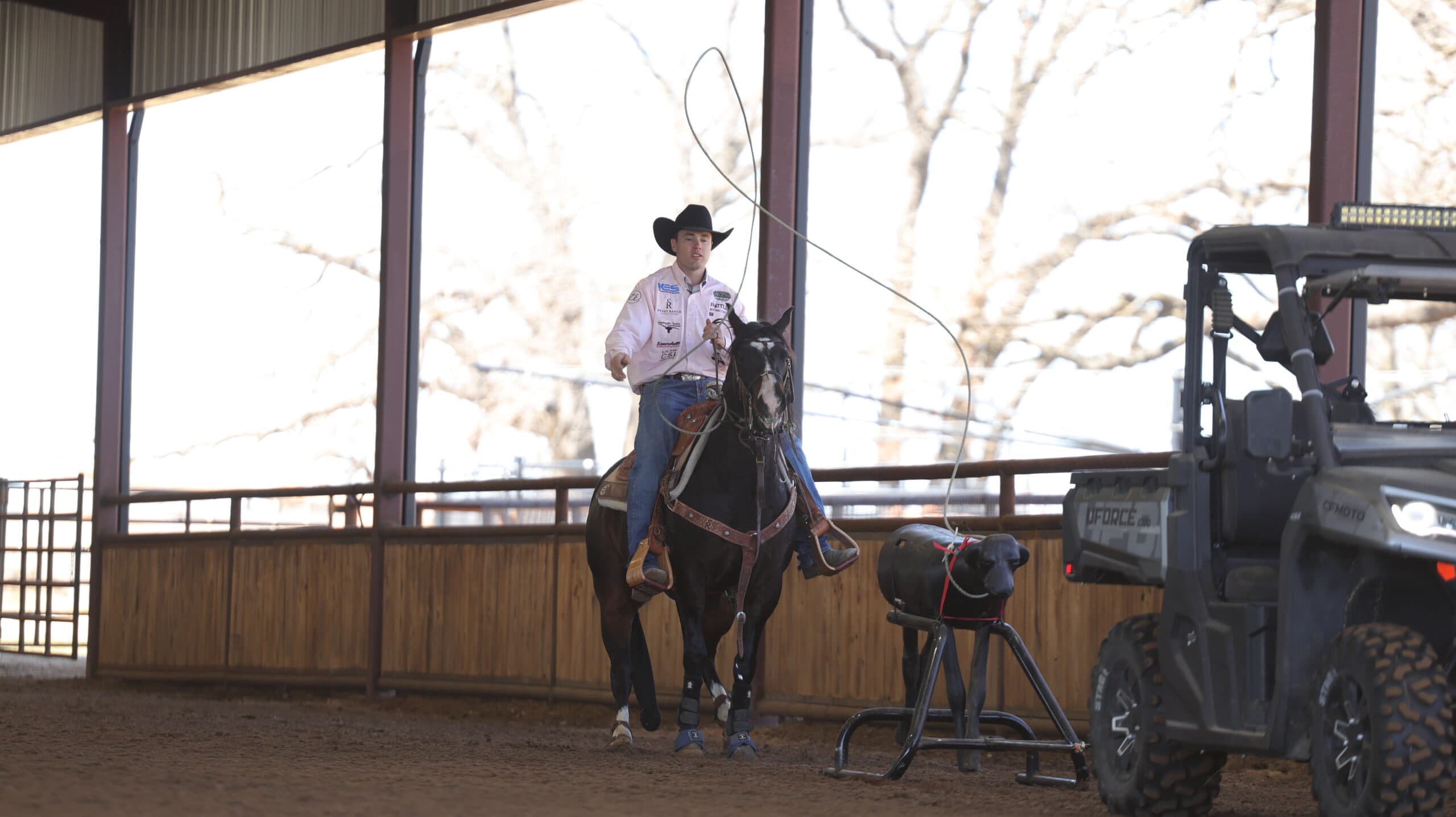
How to Find Feel in the Bridle and Get in the Right Spot on the Dummy
Emma StienikeAug 12, 2025
With Tie-Down Roper and Roping.com Coach Blane Cox
If you’re trying to bring a young horse along—or just sharpen the timing and balance on one that’s been sitting—understanding “feel” in the bridle and dialing in your position behind the dummy is where it all starts.
In this session, Blane Cox walks through how he uses pressure and release to teach a horse to stay soft and responsive—and how he decides exactly where he wants that horse to stop behind the dummy.
What Does “Feel” in the Bridle Mean?
Feel isn’t about pulling harder. It’s about getting your horse to respond when you ask, and rewarding them the second they do. Whether you’re backing one up or asking for a stop, feel is what tells you your horse is working with you—not against you.
“If I’m asking him to back up and he gives to me in the bridle, that’s where I release,” Blane says. “It’s not just about speed—it’s how he feels in my hand.”
Whether you’re seasoning a colt or fine-tuning a finished horse, this combo—feel in the bridle + controlled position on the dummy—sets the tone for everything you’ll do in live runs.
Keeps your horse light and responsive
Builds consistency on the rope
Prevents fights in the box or on the stop
Creates a horse that works with you, not ahead of you
Final Tip from Blane:
“The more you ride, the more you figure it out. Some horses want to go past it, some want to get tight—but if you listen to them and stay consistent, they’ll figure out what you want.”
From short, one-minute roping tips to hours of full-length training sessions from World Champions like Jake Barnes, Lari Dee Guy, Shad Mayfield, Clay O’Brien Cooper, Caleb Smidt, and Patrick Smith, Roping.com is the ultimate experience for every type of roper. As the exclusive home of Trevor Brazile and Miles Baker’s Relentless Remuda and the Richards’ A&C Racing and Roping, Roping.com is also the best rope-horse training resource in the industry. Start your free trial today. Click here.
If you liked this article, here are more recommended ‘how-to” articles: