A knot rope is a useful training tool for calf ropers and breakaway ropers looking to sharpen their horse’s stop.
By tying a knot in the body of the loop, the rope won’t fully close around the calf’s neck, allowing the calf to nod free after contact. The result? Realistic pressure for the horse, creating more commitment in horses’ stops without the hassle of freeing the calf by hand.
In this Roping.com video, AQHA World Champion Logan Harkey walks through how he builds his own knot rope setup from start to finish.
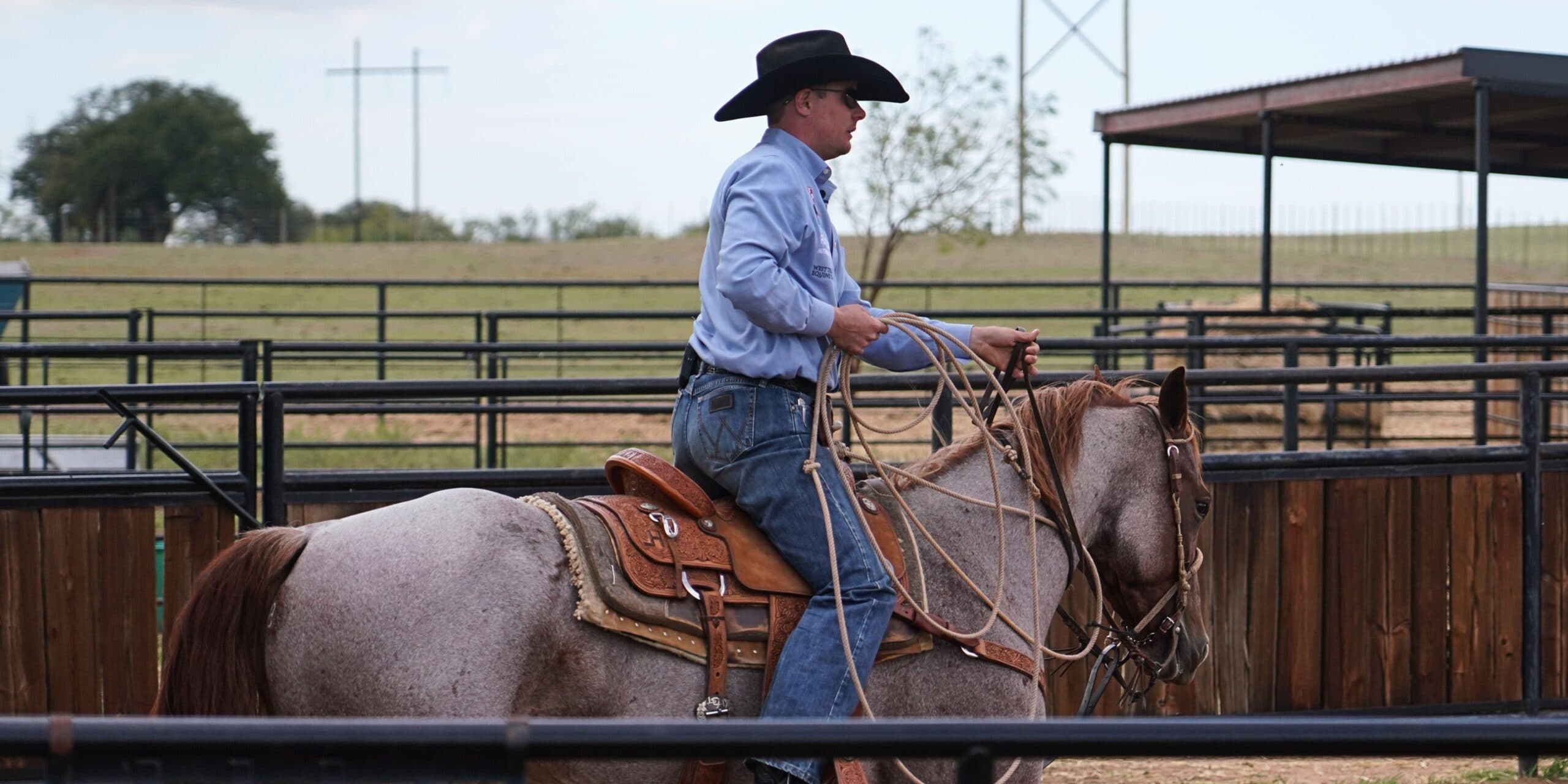
Logan Harkey demonstrates an average loop size for his knot rope. Watch the full video on Roping.com
Step 1: Tie the Knot
Harkey starts by tying a double knot in the body of the rope. The size of this knot and loop itself determines how easily the rope will release from the calf’s head once pressure is applied.
“I want it to come off the calf,” Harkey explains. “So I tie it decently large.”
Some tie-down ropers prefer a smaller knot that holds a little tighter—something you have to manually pull off the calf’s head to get your horse working—but Harkey keeps his practical. For general training, he opts for a knot that slips off naturally once the horse has made the stop.
Step 2: Cinch the Honda Down
Once the knot is in place, securing the honda is key. Harkey uses zip ties—between two and four, depending on how snugly they hold.
“Two to three seems to be the magic number,” he says. “I’ve got one with two on it currently. May have started with three, may have started with four. Couldn’t tell you—two have survived thus far.”
The zip ties keep the honda from slipping over the knot. Some ropers use electrical tape to cinch down the honda instead.
Step 3: Put It All Together
Once your knot and honda are set, you can tie the rope on using a horn knot.
And that’s it—“voilà, knot rope central,” as Harkey puts it.
A Note on Safety
Harkey also offers a reminder for ropers who practice at home.
“If you’re home alone or roping by yourself, I’d recommend sticking to either a knot rope or a breakaway if at all possible,” Harkey says. “Both should technically come loose at some point. Things happen out of our control all the time.”
The knot rope setup makes solo practice safer and more efficient—allowing a roper to focus on the horse’s stop and position without needing someone else to remove the rope after every catch.
Want to see exactly how Harkey builds his setup? 👉 Watch “How to Set Up a Knot Rope with Logan Harkey” now on Roping.com for the full step-by-step breakdown and more professional training content from the sport’s best.