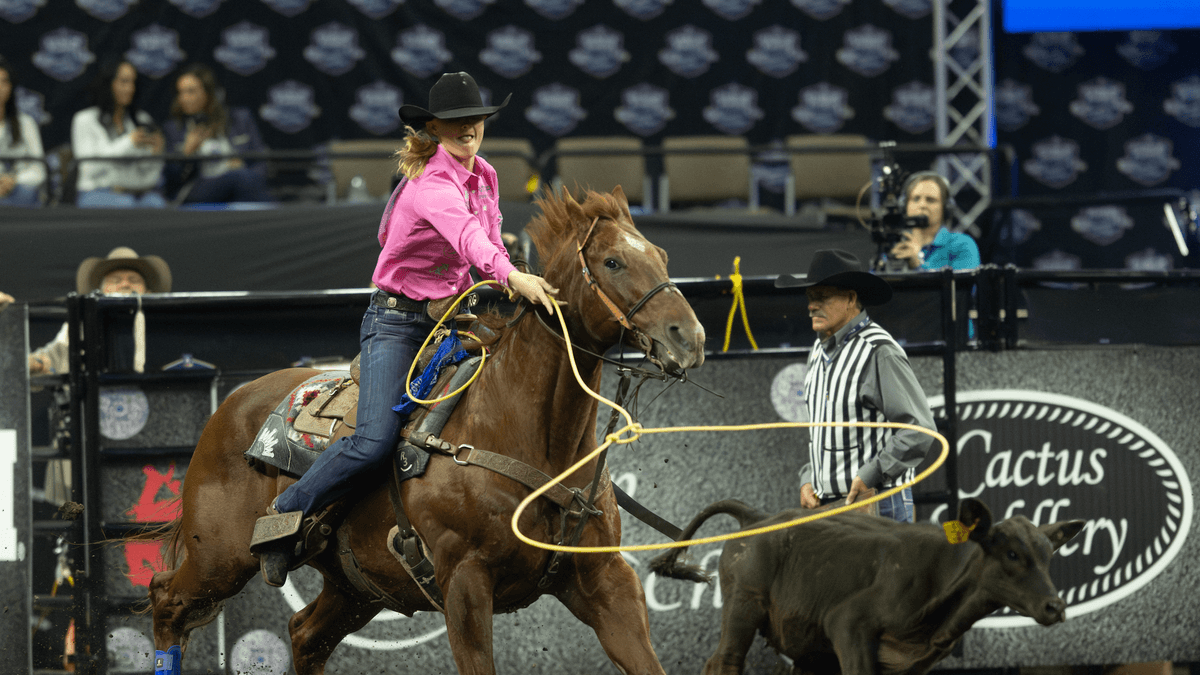
Rulebooks for the then-Girls Rodeo Association (GRA) list their standard events as bareback riding, bull riding, calf roping, goat tying and barrel racing in 1973. Team roping and steer undecorating were added in 1976, bringing the total to seven. In 1976 the term “or breakaway roping” was added behind calf roping in the list of standard events required for a full GRA All Girl Rodeo and formal rules for the event were first listed. (For the curious, it was a 45 second time limit, two-loops allowed and catch-as-catch-can.)
In 1976 a weight limit appears for the first time, adding the determining factor for whether a calf roping or breakaway roping would be held. The contest would be breakaway roping only if calves weighed over 220 pounds.
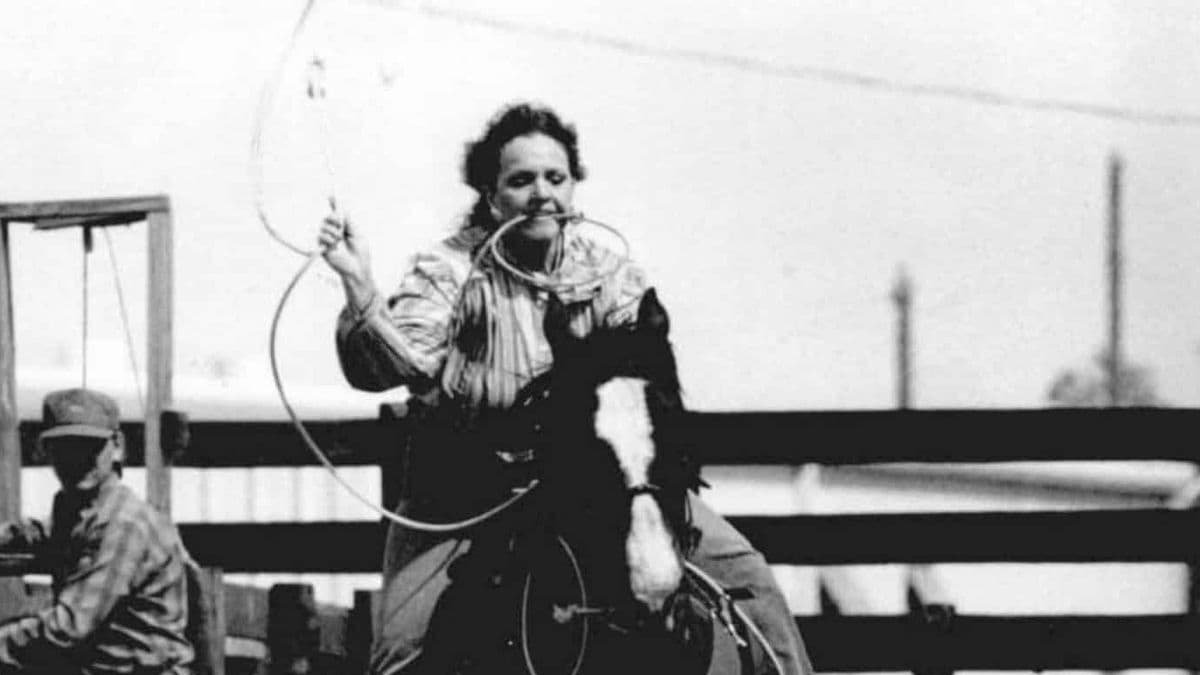
“At some rodeos, you could enter both events but sometimes it was just one or the other. But we always knew ahead of time,” Mahoney remembers. She recalls that breakaway was just getting started and rules were still being formulated.
The newness of breakaway roping was also battling against the heritage that calf roping represented to the Association. Many of the GRA’s founders were calf ropers who cut their teeth roping against men before eventually launching their own Association.
“Calf roping was the most prestigious event back then,” Mahoney admitted. “Most of us loved it.”
Jimmie (Gibbs) Munroe claimed a trio of world titles in 1975, taking the top honors in the calf roping, barrel racing and All Around. She would later become the longest serving President of the Association, eventually overseeing the 2021 to 2025 installments of the NFBR.
“When I got my card, the GRA did not have breakaway roping,” Munroe noted. Munroe actually belonged to one of the first groups of cowgirls to come through the college rodeo ranks after breakaway roping was added in 1969 by the National Intercollegiate Rodeo Association (NIRA).
“In 1975 when I won the calf roping, we never had breakaway roping at any of the all girl rodeos where I went . . . and I went to a lot of them,” she laughed.
GRA rules also stipulated that a minimum number of contests had to be held within a year in order for the Association to recognize a year-end world champion in that event.
“The year I won it, we were right on the border of having enough events [to meet the requirement],” Minick remembered. She recalled when the WPRA Finals moved to Lazy E in Guthrie, Oklahoma in 1985 and was carried on The Nashville Network on television. “They didn’t even have it then.”
Along with her WPRA World Championships in the roping, Minick also joined the Board of Directors in the late 1970s, lending her leadership and publicity talents to the growing Association. She has another idea about breakaway’s sputtering start within women’s pro rodeo.
“Everyone was so focused on the barrel racing,” Minick noted. The barrel racing has just joined the other events at the National Finals Rodeo in 1967 and was still fighting for its footing inside ProRodeo. “I remember putting together a video in 1978 for the rodeo committees, trying to convince more of them to host an approved barrel race.”
“I just think all the energy of the Board was focused on that and working toward improving the money for the barrel racing.”
Whatever the reasons, Berggren and Fuchs (Mahoney) will forever hold a unique position in the history of breakaway roping as the first to earn world titles in the professional ranks.