Breakaway roping is the fastest rodeo event, where the goal is to rope a calf in the shortest time possible. The rope is tied to the saddle horn with a small string and “breaks away” when the calf is caught, stopping the clock. Ropers often tie flags to the ends of their ropes to make the release more obvious to the judge, who stops the time.
The fastest time with a successful bell collar catch wins the event. Times are recorded to the tenth and hundredth of a second (depending on the association) and every little bit of time can make a significant difference in placing and money.
Breakaway roping barrier
The barrier is a rope or electronic sensor stretched across the front of the roping box, where the roper and horse start.
The calf is given a head start, and the barrier will release when the calf reaches a designated starting line, which gives it a head start. A longer barrier means a roper will need to wait longer, and vice versa for a shorter barrier. Timing the “go” with the barrier release is often dubbed “scoring.” A horse that “scores well” is one that will wait until a roper drops their hand and signals them to head for the line.
If a roper crosses the barrier too soon, they’ll incur a time penalty. It’s often a 10-second penalty, but some associations add five seconds.
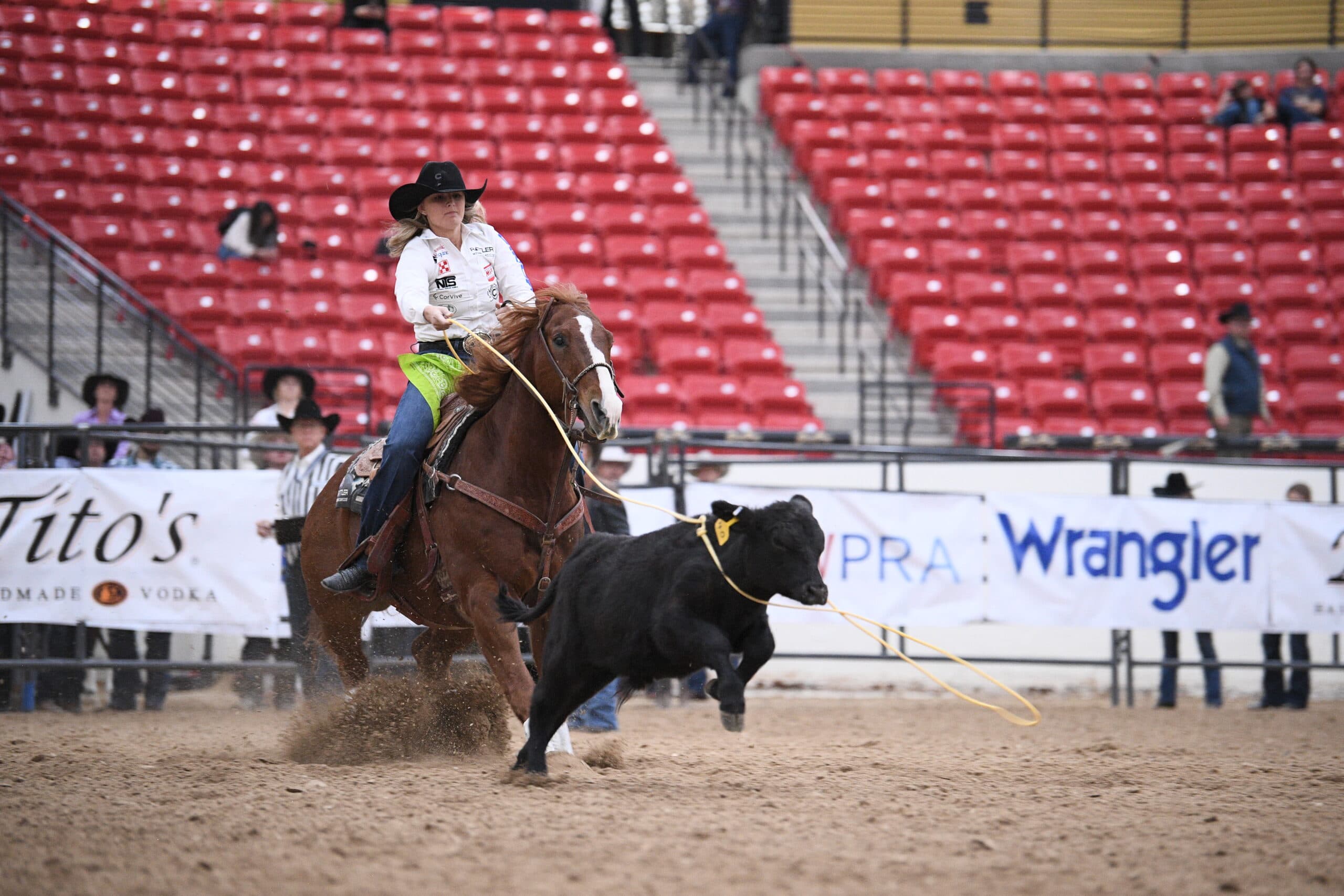
In this photo from the 2023 NFBR, you can see how the calf is about to break it’s neck rope, which triggers the rope barrier release. Kelsie Domer is experienced at timing the barrier release with coming across the line, so not a moment is wasted. Photo by Jamie Arviso.
For the catch to be considered legal it must be a “bell-collar catch.” This means the loop of the rope must pass completely over the calf’s head and close around the neck without entangling its legs or tail. If the rope catches anywhere other than the neck, the run is disqualified.
Catching a leg
This happens when a calf steps through the thrown loop. If this happens, the catch is not legal and no time is given.
Figure eight
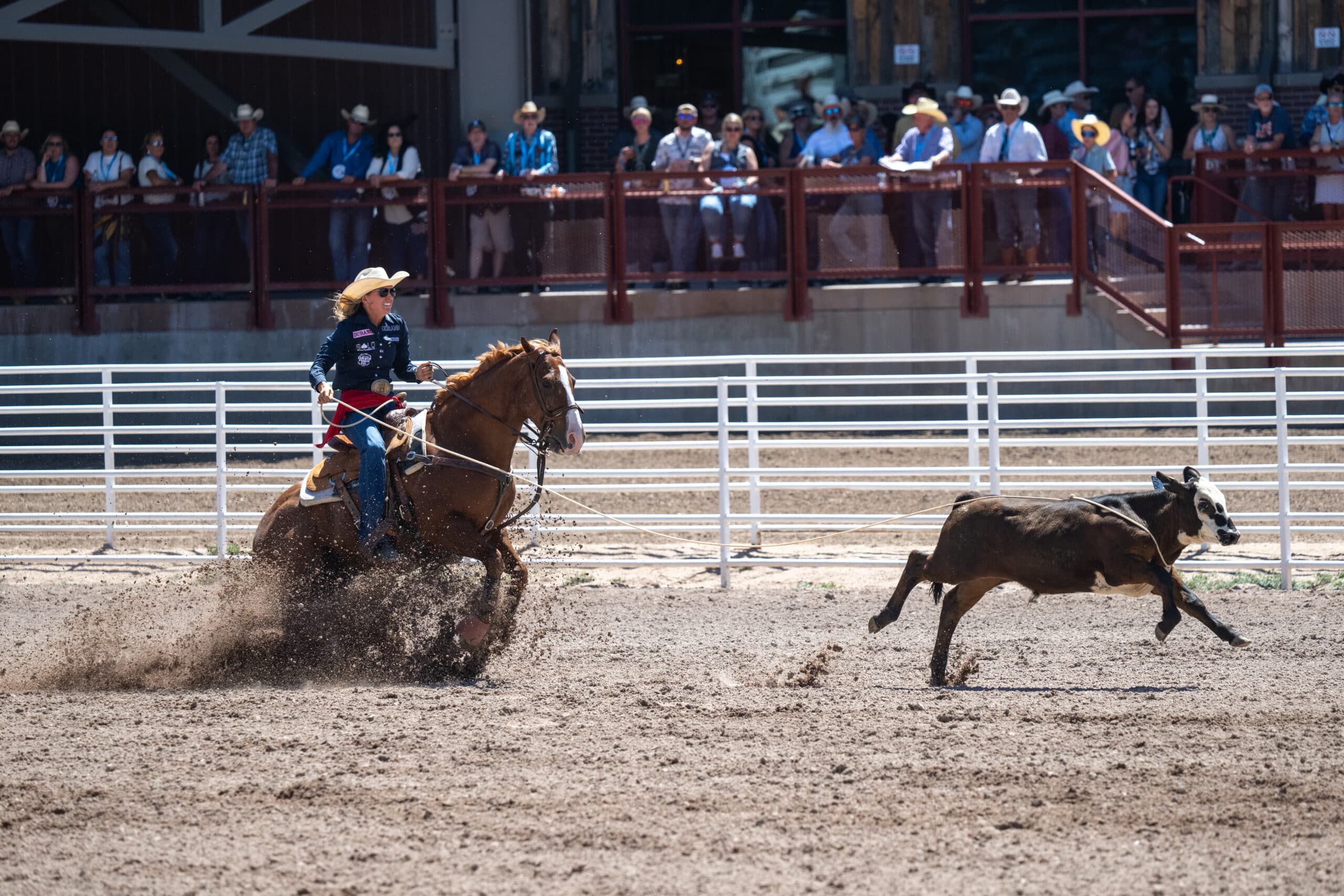
Once a loop comes around the calf’s neck, the momentum carries bottom strand of the rope around to the left side of the calf before pulling closed. The issue arrises when the figure eight is large and continues to sweep backwards, catching the calves tail. This would be a no time.
This photo shows the rope’s figure eight pattern. Photo courtesy Rickie Fanning.
Top knot
A top knot is when the rope—instead of going completely over the calf’s head—only catches around the top of the calf’s head and doesn’t go over the nose.