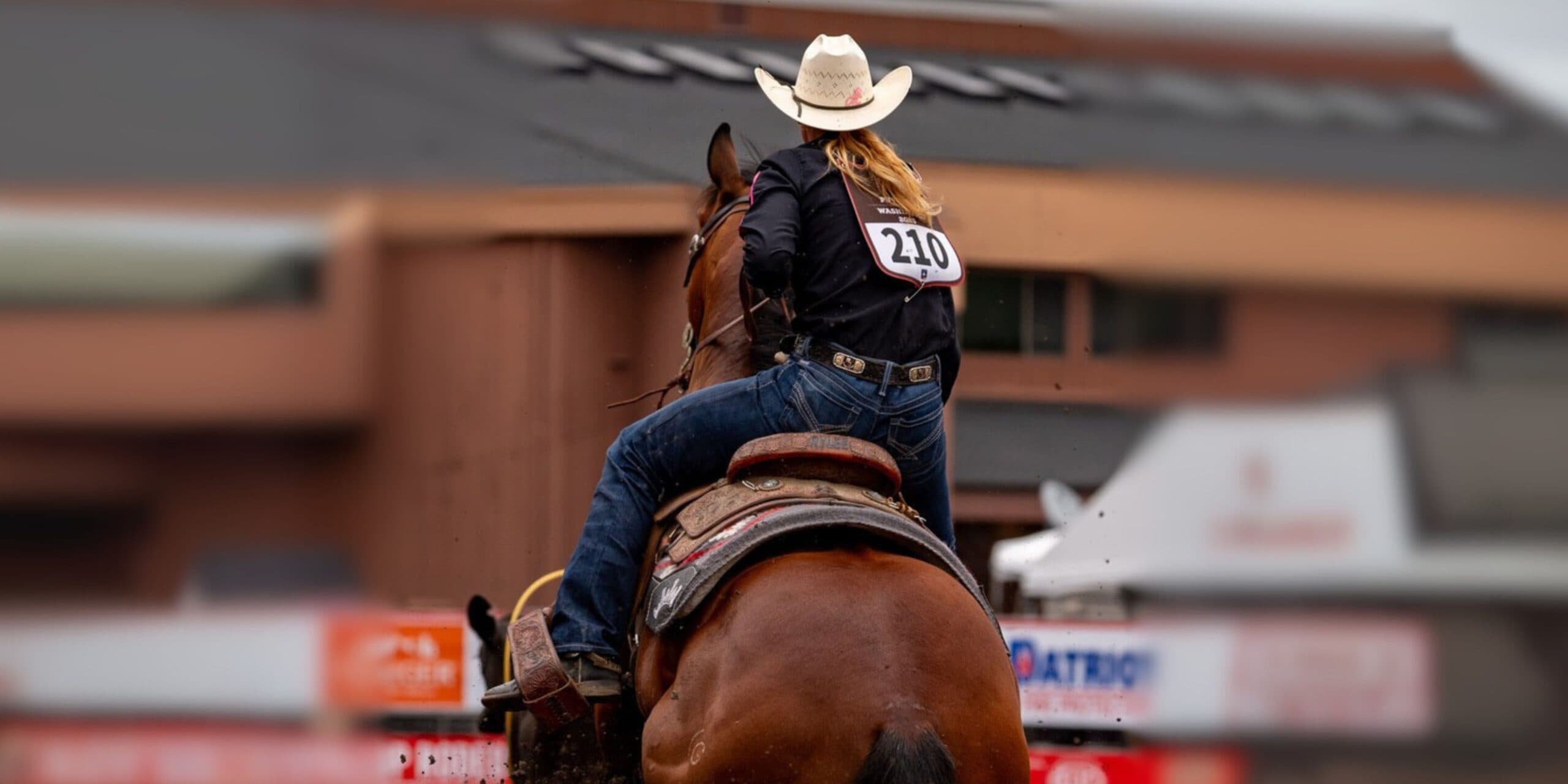
Together, they helped create the foundation modern breakaway was built on.
The Breakaway Roping Journal’s Breakaway Benefactors series originally documented 10 of those people at a pivotal moment in the sport’s history. Their stories matter even more in hindsight. From Betty Gayle Cooper-Ratliff’s influence as a champion, coach and innovator to Pam Minick’s work in competition, leadership and broadcasting; from Carole Hollers teaching generations of young ropers to producers who gave women a place to compete, their contributions show that breakaway’s growth didn’t happen overnight.
Here’s how the sport got here—and 10 people who helped build it before the boom.
The Girls’ Rodeo Association
Women have roped calves professionally since 1948, when they formed the Girls’ Rodeo Association (now the WPRA) to tie-down rope and team rope and ride roughstock like the boys. Girls’ breakaway actually first emerged in high school rodeo. The NHSRA has been crowning a national champ since 1953. The event didn’t appear in college rodeo until 1969 – after the NIRA had already been around for 40 years. The WPRA always had tie-down roping, but added breakaway in the ’70s in fits and starts until it was annual by ’89.
Breakaway at PRCA rodeos is not a new idea. When Pam Minick won the 1982 WPRA breakaway world championship, she won most of her championship money at the Bakersfield, California, pro rodeo. That was almost 40 years ago. Several PRCA rodeos had breakaway then. The Cow Palace once featured female bull riding, and thirty years ago, La Fiesta de los Vaqueros and the Greeley Stampede both set aside days for all-girl rodeos, even including the team ropers in a performance. For years, the Stephenville, Texas, PRCA rodeo included breakaway, thanks to Johnny Wayne Hampton. What’s more, Bad Company featured breakaway at all its PRCA rodeos in Texas and even gave year-end awards.
But aside from a handful of enlightened producers, it never caught on. Meanwhile, amateur rodeos had started including breakaway in the 1980s, but the only national stage for that was the NARC Finals in El Paso. It didn’t last.
“I can’t imagine if this had happened 20 or 30 years ago,” said Jimmi Jo (Martin) Montera of Colorado. “Back then, Smith Brothers had a big Open breakaway, but there was really nowhere to go. When you got done with college, you were just done. I could team rope in the mixed, but it was against J.D. Yates. Now, finally, these girls can have big goals and make big money.”
Montera is in the University of Wyoming Sports Hall of Fame for her talent roping calves. But after she did that, it was like Venus Williams having nowhere to go after Wimbledon, or Simone Biles having no Olympics. Luckily, as team roping flourished in the early 1990s, so did women’s roping.
Professional Women’s Rodeo Association
The ladies of the WPRA formed an offshoot called the Professional Women’s Rodeo Association that catered to ropers and roughstock riders. It was the female PRCA, complete with Rookie of the Year awards and the whole shebang. The top 15 qualified for the Women’s NFR, held then at the premier arena in the country – the Lazy E – and later at the historic Cowtown Coliseum in Fort Worth. The cable network TNN televised the Women’s NFR, which used the acronym WNFR before the PRCA took it over thanks to Wrangler’s title sponsorship of their NFR. It cannot be overstated – the original WNFR was a BFD.
It gave Montera and her peers a place to go. She made the WNFR and won WPRA world breakaway championships in 1991-92 and the world all-around title in ’93. Lisa Gasperson, Jayme Marcrum and JJ Hampton stepped up to claim gold buckles the rest of that decade, after hauling a million miles just like they were in the PRCA.
Most of the breakaway ropers started flanking and tying calves, too, because it was so darn fun to #ropelikeaboy. They also entered steer breakaway and steer stopping at select events. By the mid-1990s, the best of the best were rodeoing hard with their breakaway string. Every woman who’d ever been handy with a rope was hitting the pro-rodeo trail from Atlanta, Georgia, to Red Bluff, California. A lot of gals even flew to rodeos, chasing points toward world titles. Pam Minick and Debbie Garrison, a pair of former Miss Rodeo Americas with spousal ties to the Dallas Cowboys and the famous honky-tonk Billy Bob’s Texas, brought plenty of glamour to the ranks of hard-core calf ropers.
It wasn’t easy. The directors—all competing cowgirls—cajoled and schmoozed and tirelessly worked to get contractors to produce the rodeos and put up prize money and advertise. The contestants drove a million miles to hundred-dollar-added rodeos just for a chance at a WNFR qualification and a world championship.
Life on the Road
Those 1990s WNFR contestant jackets and gold buckles were earned mile by mile, penny by penny. That legacy is the reason there are women’s world titles today. “World championships” are what have given today’s cowgirls some crucial legitimacy. Without them, it would have been even harder for the PRCA to pay attention to professional women ropers.
In those days, the atmosphere during every single all-female pro rodeo from South Dakota to New Mexico was just like a crisp morning of slack at ol’ Cheyenne or a performance at RodeoHouston – it was electric. These women were the best in the world, winners with killer instincts. One of them, J.J. Hampton, hasn’t changed in 30 years, since she drove all over the country with her sister and nodded her face for first place or nothing. They were the greatest of all-time.
“It was such a thrill,” recalled Hampton, who last won a world title 20 years ago but is back on top now and poised to rope at the NFR. “We were rodeoing! We drove all over and had circuits and we rodeoed. We had no expectations – we just rocked on and did it. Now, to be part of this progression is awesome. But we’ve been doing this a long time. It ain’t like it’s something new.”
Those women from all walks of life would watch each other’s kids while they roped; they’d gather the calves at the ancient fairgrounds in Jan Youren’s hometown; they’d fly in and stay at each other’s homes and borrow each other’s best rope horses.
“There were a lot of women athletes that were freaking fabulous,” Hampton said. “We all knew we had things going on at home and were wearing a lot of different hats, but on that particular afternoon we were just cowgirls in the arena doing what we loved and kicking ass – there’s just nothing better. It was pretty special to me.”
The World Title
They had created a national platform of their own. But cowgirls are used to having their own backs. The first NFR was held in 1959 but not until almost 1970 was barrel racing included. In the meantime, the WPRA gals went ahead and held their own “NFR Barrel Race” everywhere from Scottsdale to Santa Maria. Ropers have done the same.
Now, there are no all-girl rodeos. A dwindling number of roughstock entries and the emergence of 4D barrel races combined to exterminate the PWRA. For the last dozen years, the WPRA simply has been co-approving amateur rodeos and jackpots to have a standings. Its Finals is just another open-to-the-world, lucrative weekend in Texas—although several Texans continue to claim “WPRA world championships” every year.
That shift had already occurred by the time “all-girlies” caught Lari Dee Guy’s attention, the day a friend called and asked if she’d heel at the newly renamed Women’s World Finals. Guy spent her career jackpotting, amateur rodeoing, training, and teaching – not hitting the road with the hardscrabble cowgirls of the 1990s or traveling the country like the boys to earn her gold buckles. But still, she understands.
Guy’s recent Instagram post marveling at the $1.2 million being paid out to all-girl competitors over one weekend in November said this: “The WPRA supported women in roping long before it was the cool thing to do. The oldest professional women’s sports organization (the WPRA) had our backs when nobody else did.”
According to Jackie Heinricher, the first female Indycar team owner, “It’s time for women to win! It’s time for women to compete at the top of racing.” The same could be said of rodeo. The women have been ready for decades. The legitimacy that finally got them invited to play with the boys came in part from various progressive contractors, committeemen and sponsors. But mostly it came from the women of past decades who stuck their necks out and dragged their checkbooks around to organize, compete and hold up women’s roping.
The 10 profiles below highlight people who helped breakaway grow despite decades of limited opportunities for women in mainstream professional rodeo. Through competition, coaching, advocacy and production, each played a role in building the sport we know today.
1. Betty Gayle Cooper-Ratliff — The Coach + Innovator
2. Pam Minick — The Champion + Promoter
3. Jennifer Casey — The Advocate
4. Carole Hollers — The Teacher
5. Cindy Gruwell — The Producer
6. JJ Hampton — The Competitor
7. Mack Altizer — The Rodeo Producer
8. Charlene Camblin
9. Jolee Lauteret-Jordan — The Administrator + Advocate
10. Lari Dee Guy — The Trainer + Mentor