Brad Culpepper’s George Strait Win That Almost Didn’t Happen
Chelsea ShafferJun 9, 2026
By the Monday before the 2006 George Strait Team Roping Classic, Brad Culpepper had already made up his mind not to go.
His best horse was hurt and his backup hadn’t been tested at that level. Culpepper didn’t feel confident in the situation and, more importantly, he didn’t think it was fair to his partner, Speed Williams. He called to back out.
Williams didn’t give him the option.
He told Culpepper he was coming anyway—even if it meant finding him another horse. The partnership was set, and Williams wasn’t interested in scrambling for a new heeler days before one of the biggest ropings in the country.
So Culpepper made the 15-hour drive from Georgia to Texas, unsure of what he had underneath him but willing to take the shot.
That decision changed everything.
Culpepper wasn’t an unknown. He was a five-time National Finals Rodeo qualifier and a two-time NFR average champion. But this version of Culpepper was different. He hadn’t been to Las Vegas in a few years and, like a lot of veteran ropers, he was balancing confidence with reality—horses, timing and the rhythm it takes to win at that level.
From the start, the weekend demanded commitment.
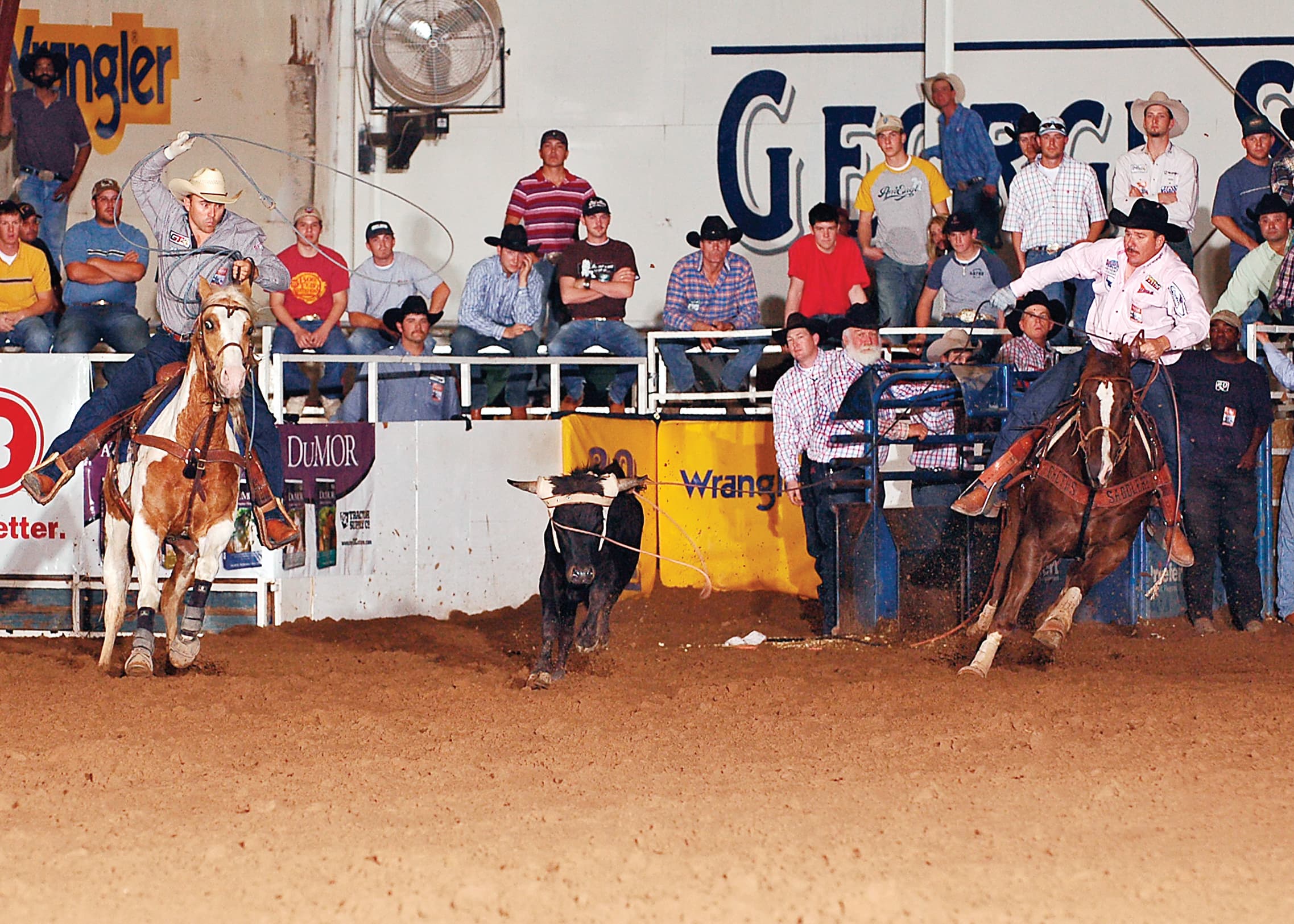
Williams and Culpepper came out aggressively, stopping the clock at 4.5 seconds to win the first round against nearly 600 teams. It was the kind of run that immediately puts a team in position at The Strait, where momentum matters as much as anything.
They followed it with another clean run to finish 12.6 on two and advance to the short round.
“I’ve been nervous for two days,” Culpepper said at the time.
The nerves weren’t about the spotlight. They were about execution. He knew what Williams would do on the front end. If Culpepper could do his job, they had a real chance to win.
The short round at the George Strait Team Roping Classic built pressure by design. Teams ran from slowest to fastest, and the leaders are forced to watch the field take their best shots.
That pressure doubled for Williams, who had two teams in contention—first with Culpepper and second with Rich Skelton.
When the dust settled, Williams and Skelton laid down a 5.29 to take the lead with one team left to rope.
Himself and Culpepper.
The number to win was a 5.8.
Nothing fancy. Just clean.
“In the short round, you just do what you practice,” Culpepper said.
Williams did his part, turning the steer clean. Culpepper finished it, catching both feet and going to the horn in 5.15 seconds.
That sealed the win. More than $55,000 per man. A truck. A trailer. And, for Culpepper, his first win at one of the most prestigious ropings in the sport.
The detail that makes the win stand out isn’t just the result. It’s what he rode in on.
Culpepper’s horse that weekend was a 7-year-old he’d trained himself—one he hadn’t fully trusted in that kind of setting before.
“I didn’t know how he was going to do,” he said.
He found out in real time, under pressure, against the best in the world.
This wasn’t a breakout in the traditional sense. Culpepper already had the résumé. But it was a reminder of something every roper understands—opportunities like this don’t wait until everything is perfect.