How the Square Drill Builds a More Accountable, Explosive Barrel Horse
Emma StienikeApr 10, 2026
If your horse is diving into the turn, quitting forward motion, or forcing you to pick them up and place every step, you don’t have a turning problem. You have an accountability problem.
World Champion Barrel Racer, Jordon Briggs and NFR Qualifier, Danyelle Campbell, use this exercise not just to shape a turn, but to build a horse that stays forward, balanced, and responsible for their own feet.
Here’s how and why it works.
Step 1: Break the “Commit and Quit” Habit
One of the biggest issues Briggs points out is what happens the moment a horse thinks turn:
“They commit to the turn… and forward motion disappears.”
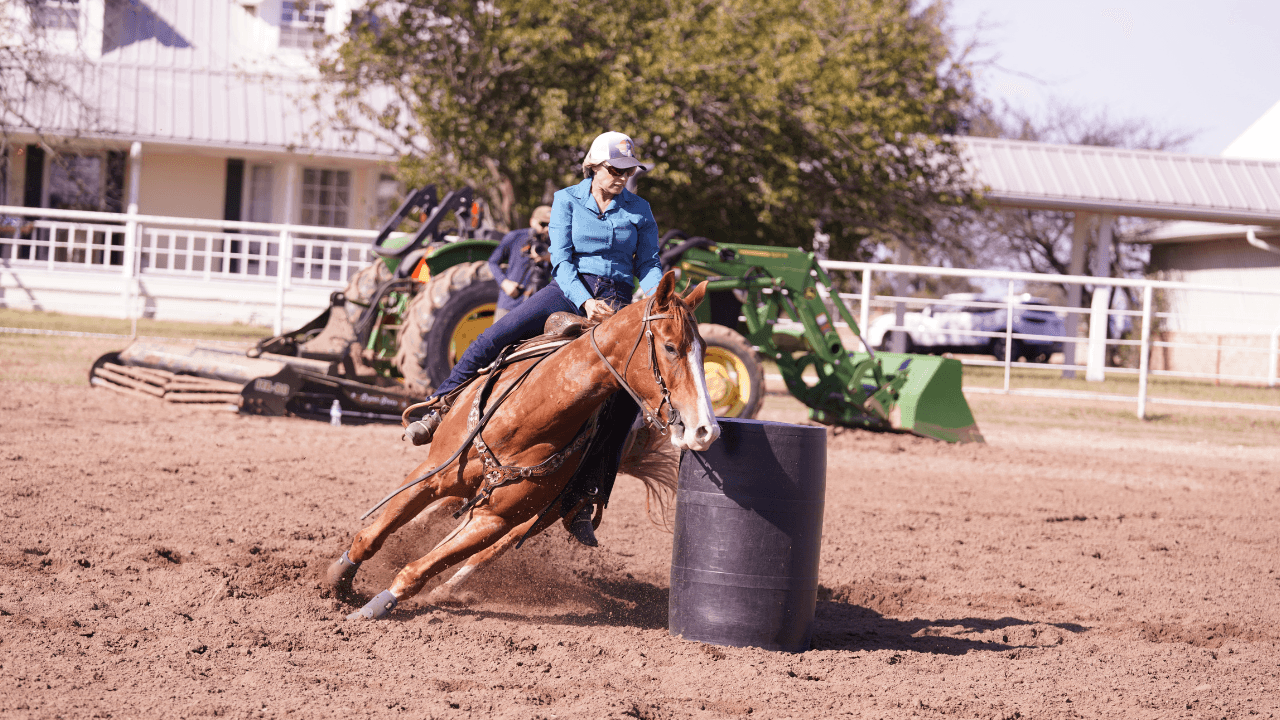
Instead of driving through the turn, horses will plant, drop their front end, and get stuck, forcing the rider to reach, lift, and fix the problem mid-turn.
The square drill rewires that.
Instead of one continuous arc, you’re teaching:
Half turn → go forward
Half turn → go forward
Repeat
This keeps the feet moving and prevents that “stuck in the turn” feeling. The goal is simple: forward motion never shuts off.
Step 2: Let the Horse Find the Spot
This is where most riders get it wrong.
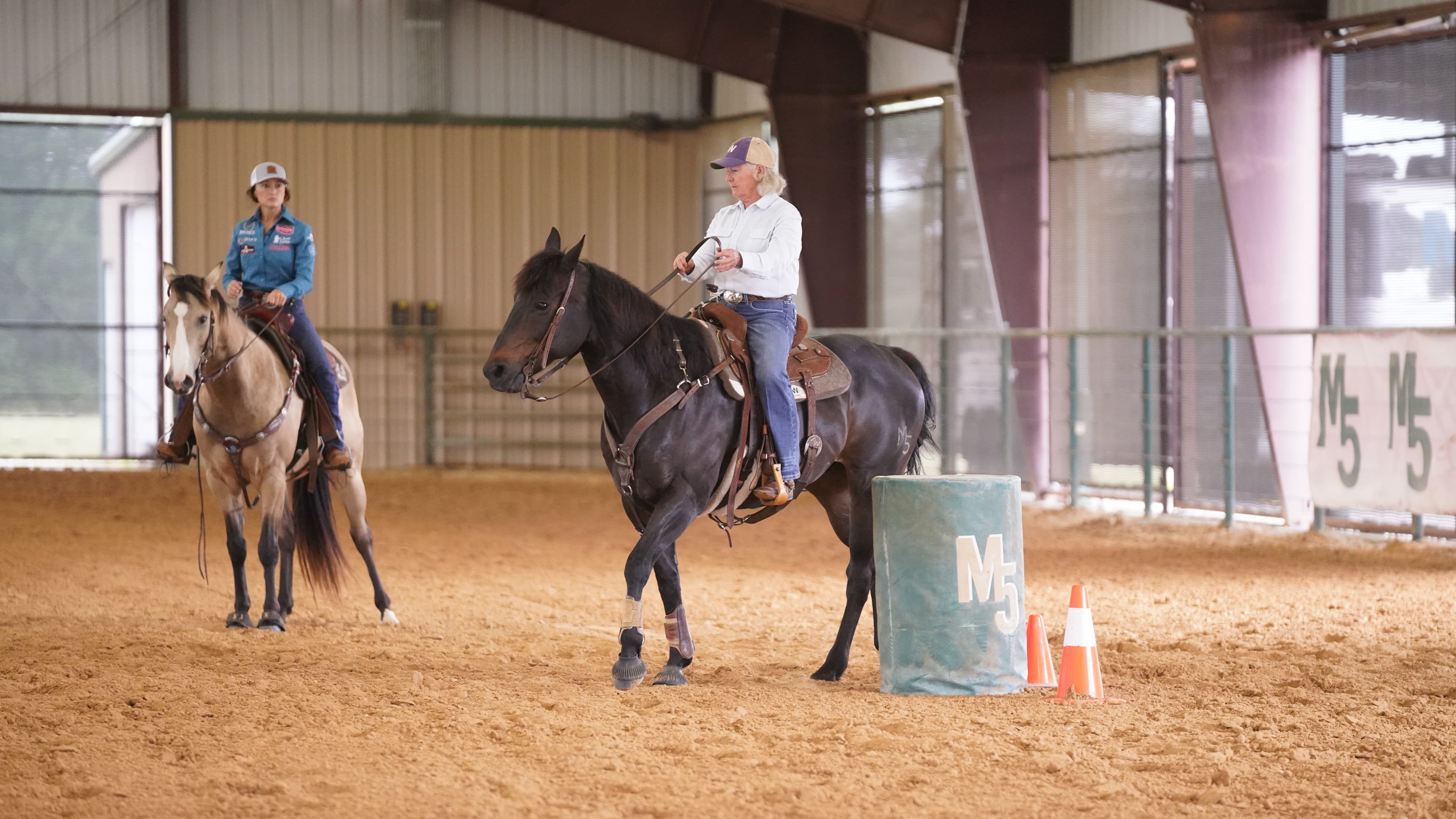
It’s tempting to help by lifting, guiding, and physically moving your horse into position. But according to Campbell, that defeats the entire purpose.
“The point is accountability. They’ve got to get there on their own.”
What you should be doing:
Guide with light cues
“Bump” with your hand—not shove
Keep your hand low and intentional
What you shouldn’t be doing:
Lifting the shoulders to place them
Over-correcting with your hands
Forcing the turn
Jordon’s approach is subtle. She releases her horse to the next point and expects them to carry themselves there.
Step 3: Fix the Body, Not the Bit
If your horse is fighting the bridle, tossing their head, or feeling resistant, it’s easy to blame equipment.
But both Briggs and Campbell are clear:
“It’s usually not a bit problem—it’s a body control problem.”
When the front end is down and the body isn’t engaged, the horse physically can’t respond correctly to your hand.
The fix?
Keep the feet moving
Prioritize forward motion
Build softness through the body
Campbell puts it simply: “Forward motion fixes everything.”
If there’s resistance, don’t back off—move through it.
Step 4: Use Your Hands Correctly (Especially Early On)
If you’re introducing the square drill or working with a green horse, go back to the basics.
Campbell recommends:
Split reins
Two hands
Lifting around and slightly up to shape the turn
This helps the horse understand the path without getting stiff or stuck.
Once they’re broke and responsive? That’s when you can transition to one hand—like Briggs demonstrates.
Step 5: Build Strength That Carries to the Pattern
This drill isn’t just technical, it’s physical.
Think of it like strength training.
“It’s like planking,” Campbell says. “It engages every muscle.”
The benefits:
Stronger hind-end engagement
Better front-end elevation
More explosive turns
Increased overall soundness
It’s hard work. Horses will get tired. That’s part of it. Because those are the exact muscles they need when it’s time to run.
Step 6: Fix Your Body Position
The square drill doesn’t just train your horse; it exposes you.
Briggs admits it helped her recognize a common mistake:
Sitting too soon
Dropping to one hand too early
The drill forces you to:
Drive your horse forward to a point
Stay upright longer
Be intentional about when you cue the turn
If you’re struggling with forward motion, look at your eyes.
Riders who get stuck are often looking down or at the barrel.
Instead:
Pick a spot on the ground
Ride to that point
Then make your move
Where you look is where your horse goes.
The Takeaway
The square drill isn’t flashy. It’s not a quick fix.
But it’s one of the most effective ways to build:
A forward, responsive horse
Cleaner, more consistent turns
And a rider who’s just as accountable as their horse
As Campbell puts it:
“This is part of the craft.”
And just like any athlete—whether it’s a dancer or a timed-event competitor—you don’t skip the fundamentals.
Better horsemanship, a stronger mentality, faster and smoother runs—BarrelRacing.com’s Ride TV channel offers training videos from beginner to advanced barrel racing instruction from the most respected voices in the industry. Cut time, gain confidence and win more with the best training tool for barrel racers. Subscribe now for just $19.99/month to learn from top hands like Jordon Briggs, Ryann Pedone, Cheyenne Wimberley and Danyelle Campbell.
This article was originally published on BarrelRacing.com — Training. View original article →