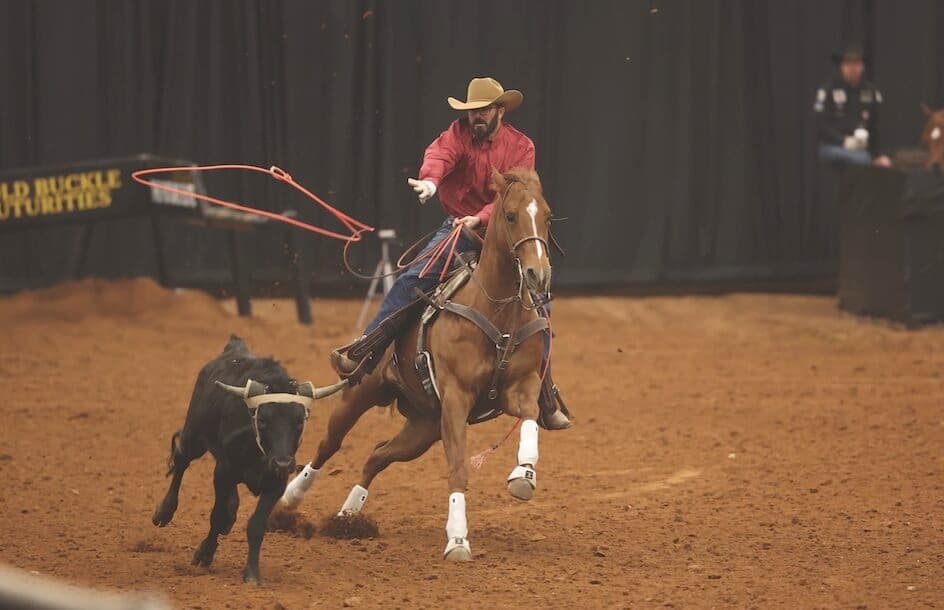
For showing, that’s where I like to be—inside a coil, at a comfortable spot. That’s my catch spot.
I like that on my throwing hand, my thumb is down and I’ve got good follow-through. Both hands are going towards my target—I like that. That sets up your shoulders and your body to be in line with the target. I don’t want my left hand busy, so I’m trying to crawl out over my horse instead of manually making them rate. I’m trying to keep my left hand down so my horse rates off my swing. That’s been something I’ve had to really work on because I used to want to keep picking up with my left hand before I throw.
At this point in the delivery, I’m trying to stand up when I deliver. My feet are out of her, and I’m trying to keep my weight under my big toe. That’s the only thing I really focus on—staying on the balls of my feet. It helps me get my body in the frame that I want it in.
My shoulders are in line with my target, and I’m to the front of the saddle in my delivery, with my shoulders tilted just a hair forward, which helps stay over the top of the horns.
BILLIE JACK SAEBENS
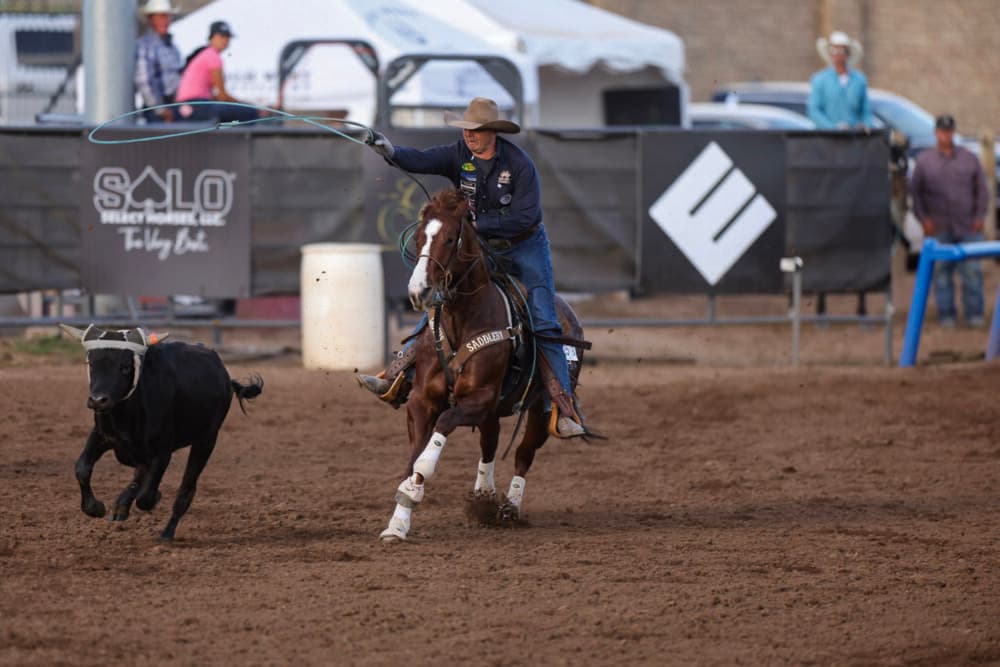
That’s the lane I like for the stage of the game this horse is at right now. I could be maybe a half-step wider, but I like his spot right there pretty good.
My upper body is just staying centered, keeping my chin above the saddle horn and keeping my horse underneath me and gathered, driving from behind.
My left hand is really just helping me catch the horns at this point. This horse doesn’t require much guidance at that point of the run, so I’m able to just focus on catching.
My feet are real square right here just trying to keep them between my cinches and stay balanced. I’m riding centered and staying out of his way.
RHEN RICHARD
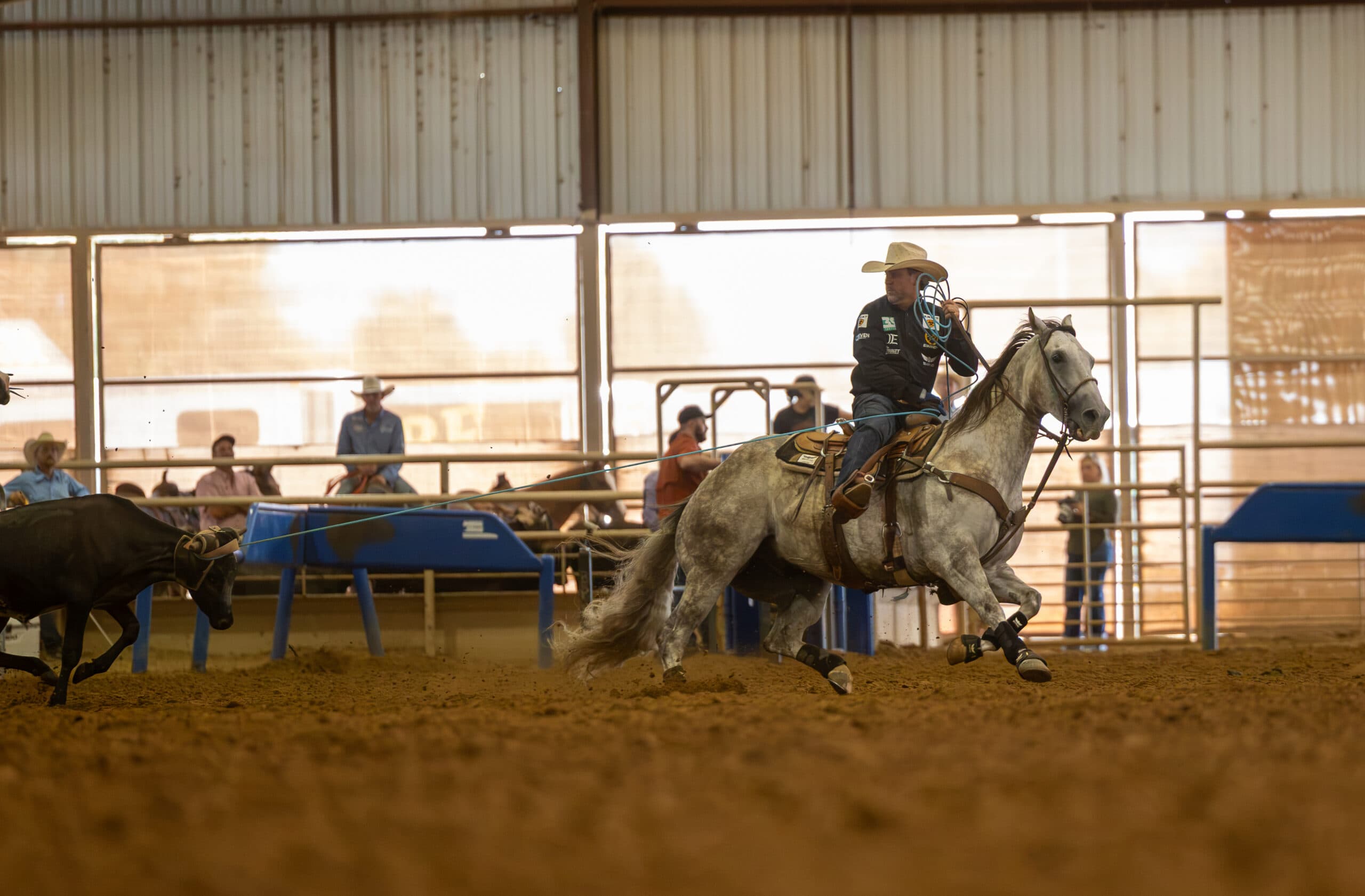
I’m right up the steer’s back when I’m throwing, maybe 3 feet to the left. My horse is tightened up and rating when I throw. When my loop is at the back of the steer’s head in the second picture, she’s starting to get in a position to get the steer’s head fast. A lot of people are catching their horses there, but she’s soft.
In my delivery, in the first picture you can see my thumb is pointed down. I’ve really worked on doing that because it helps my loop finish down over the left horn and basically lets me hit my target. I want my hondo hitting close to the base of the left horn. On a perfect loop, I think there should be the same amount of coverage on both sides—kind of what that second picture shows. I’m waiting on my tip and not getting ahead of it when I’m throwing. I don’t have more coverage on the right than I do the left.
The thing I want my horses to do after I throw is to step up and gather. In the second picture, my toes are starting to come up. That mare doesn’t want to step away from the cow when you throw. You can almost see my right leg is tight and my left leg is open. I think the cue there is—once she gets in the position I want—that my left leg closes until I want her to start pulling the cow.
—TRJ—
Learn from the pros. Unlock the secrets of successful heading with Roping.com’s exclusive collection of instructional videos. Start your free trial to watch.